Saturday, October 31, 2015

Puzzle Boxes


Puzzle boxes are great. We like both the complex, and the not-so-complex. With varying mechanisms come varying styles, but they all add a little fun to an otherwise straightforward object.
Handcrafted Koyosegi Puzzle Box from Dogwood Hill Gifts
7-Step Koyosegi Puzzle Box 
It seems the first puzzle boxes came from the Hakone region of Japan in the early- to mid- 19th century. They were called himitsu-bako, or personal secret box, and were decorated with yosegi-zaiku marquetry. 
 6-Step Hexagon Puzzle Box
6-Step Hexagon Puzzle Box

 Hexagon Puzzle Box from Dogwood Hill Gifts
Hexagon Puzzle Box, Open
This amazing technique is still practiced today, but only by a small number of artisans. Yosegi-zaiku involves putting together different types of wood with naturally varying colors into geometric patterns. Then the stack of patterned wood is shaved with a special plane into thin veneer slices, and the veneer applied as decoration. 
4-Step Cube Puzzle Box
We proudly offer three examples of handcrafted yosegi-zaiku puzzle boxes in our collection. They all feature the koyosegi pattern on all sides, and are handcrafted by Hiroyuki Oka, who carries on the tradition of making these wonderful boxes.

From Bali, we have two puzzle boxes of a less complex nature, but full of charm 
and simple beauty. 
Hand-carved from suar and sono woods, the simplicity allows the 
beauty of the wood to shine.
 Hand-carved Dragon Puzzle Box
Dragon Puzzle Box
After learning her craft from her father, Eka now handcrafts these beautiful boxes. They require the removal of a pin-like piece so the top of the box can slide off and reveal an inner compartment.

 Handcarved Heart Puzzle Box from Dogwood Hill Gifts
Heart Puzzle Box
Heart Puzzle Box, Taken Apart
From Guatemala we have a creative puzzle box made by artisan Francisco Mendoza. He's been handcrafting puzzle boxes since 1990, and enjoys coming up with new designs. Here he's turned a little piano into a fantastic puzzle box:
 Piano Puzzle Box from Dogwood Hill Gifts
Piano Puzzle Box
 Piano Puzzle Box from Dogwood Hill Gifts open view
Piano Puzzle Box, Taken Apart
We think puzzle boxes are great additions to our collection because we believe in supporting the artisans who continue to handcraft these interesting boxes, and we think they make outstanding gifts. Hide a little treat in any of these puzzle boxes, and enjoy watching the recipient have to work (just a little!) to get to it. It's two gifts in one!
Puzzle boxes are conversation pieces, and wonderfully decorative items to display. We will continue to look for unique puzzle boxes to add to our gift collection, so please stay tuned...

Thank you!
-Dogwood Hill Gifts


Wednesday, October 7, 2015

Dogwood Hill Gifts

It was a busy summer for us as we expanded...
we went from Dogwood Box to Dogwood Hill Gifts!

It was a natural progression.
We began by offering a collection of handcrafted decorative boxes, but soon realized that there are so many incredible craftspeople out there that we didn't want to limit ourselves to just boxes anymore. We thought a new name would reflect that. 

Hand-Painted Ceramic Jars- Set of 3 from Dogwood Hill Gifts
Of course, we'll still carry decorative boxes.  We still love them! And we still think they make a perfect gift for anyone on your shopping list, but now we can also explore the amazing world of jewelry, glassware, accessories, and more.

Turquoise Squares Bracelet from Dogwood Hill Gifts

We're very excited about this change, and we're adding to our collection every week! 

Take a look at Dogwood Hill Gifts

As always, everything is handcrafted and fairly traded. 
We strive to be an online gift boutique where you can shop from a curated collection of handcrafted gifts. The kind of gift shop we'd like in our neighborhood, but even better because we can ship directly to the recipient. 
And every item is presented as a gift: boxed and ribboned.
Handcrafted gifts mean more.

Olive Wood Triple Bowl and Spoons from Dogwood Hill Gifts

We thank you very much for your business, and for supporting a world-wide community of artisans!

Wednesday, February 11, 2015

Shades of Celadon

 Celadon Ceramic Box from Dogwood Hill Gifts
Celadon Ceramic Box


The greens and blues of celadon ceramics are absolutely beautiful.  With seemingly infinite shades to explore, artisans continue to work with celadon, building on two thousand years of history. 

Celadon is both a glaze and a type of stoneware (stoneware is pottery fired at very high temperatures, making it non-porous).  The earliest celadon, called Yue ware, originated in China during the Han dynasty (206 BCE - 220 CE), and the glaze at that time was actually a brownish green.  It is the high levels of iron in the celadon slip that turn the pottery various shades of green and blue during firing.

Over time celadon stoneware was exported to India, Persia, and Egypt, then later to Asia.  Since the 900's artisans in Korea, Thailand and Japan have developed their own styles and techniques, working with color, form, decorative motifs, and the distinctive cracking of the fired glaze.
 Celadon Ceramic Box from Dogwood Hill Gifts,  glaze detail
Celadon Glaze Detail


The celadon boxes in our collection are from Thailand, from wonderfully different artisans carrying on the tradition of celadon ceramics - looking to the past while adding their own perspectives.
 Celadon Owl Box from Dogwood Hill Gifts
Celadon Owl Box
 Celadon Ceramic Box from Dogwood Hill Gifts
Celadon Ceramic Box, Top Detail


Friday, February 6, 2015

Tissue Box Covers - A Different Kind of Box


What happens when we come across artisans handcrafting fantastic decorative boxes that just happen to be tissue box covers?

We add them to our collection of decorative boxes.
A tissue box cover is just a different kind of box, we reason.

And these folks are putting it all together just the way we like it: handmade, full of tradition, useful but interesting.


These tissue box covers have all the elements we love, and they look amazing in the home and the office.

Why put up with that naked cardboard box when you can cover it with a unique, artisan-made creation?

Add color, add design, add interest, and add personality.


Just like our decorative boxes, we have an eclectic collection of tissue box covers.  We strive to represent various countries and craft traditions.


Learning about and appreciating craft traditions and the process of handcrafting is exciting for us, and what we're all about, really.

So, among others, we have hand-hammered copper from Mexico, American folk art, woven bamboo from Thailand, and tinwork from New Mexico.

These tissue box covers (just like our decorative boxes) represent artisans who are hard at work keeping the traditions of their families and regions alive, and continuing to think that handcrafted means something that's worth preserving.
We love that!


You can see our tissue box cover collection here:
Dogwood Box - Tissue Box Covers


Thursday, October 16, 2014

Thuya Wood Boxes

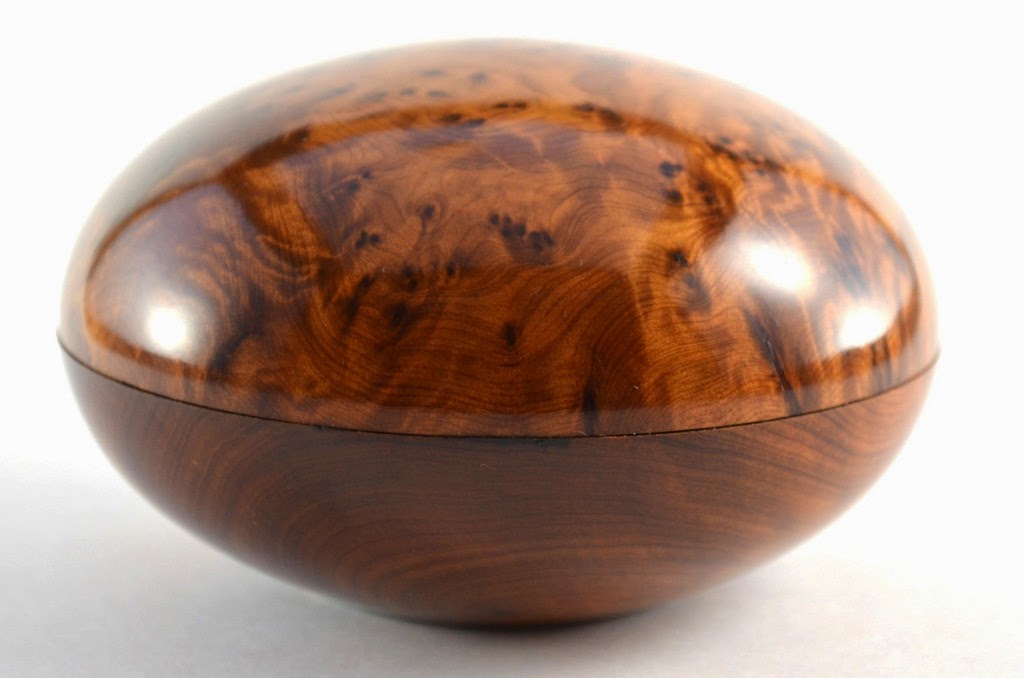
Thuya wood (pronounced twee-ya) is a very special wood.  It comes from a coniferous tree in the cypress family (Tetraclinis articulate) that is native to the Atlas Mountains in Morocco. Today, although there are small endangered thuya populations in Malta and Southern Spain, the trees still primarily grow only in Morocco.

The other reason this wood is rare and highly prized is because it is the underground burls that grow from the roots, not the trunks of the trees, that are harvested. These burls are relatively small and heavily figured resulting in gorgeously patterned products.

Because of the burl the wood can be difficult to work with, splitting and chipping easily. Artisans in Morocco know that it should be shaped by hand, then sanded and rubbed with oil and lemon juice to bring out the natural lustre and grain pattern.  In Morocco, particularly in Essaouira, generations of artisans have been working with thuya wood and handing down skills and techniques.

Our lovely thuya wood boxes come directly from Morocco, fairly traded of course.  By continuing our support we hope to be part of the effort to keep the handcrafting tradition alive. Replanting programs and regulating measures are in place to protect the trees, and craftspeople continue to teach their children the techniques they learned from their parents. Sounds good to us.

The boxes are everything that boxes should be: they absolutely delight the eye, they feel good in the hand, and they intoxicate with a smoky cedar-like scent when opened.
When it comes to boxes, you couldn't ask for more.


Friday, September 26, 2014

What is Fair Trade?

Fair trade, in essence, has come to mean a commitment to fair business practices so that workers are paid a living wage, are never exploited, and are ensured safe working conditions.

It's a movement that began as early as the 1940's and primarily impacts commodities and handicrafts. It demands higher standards for people and the environment, and it's a movement that we at Dogwood Box believe in.

For us, buying fairly traded handcrafted boxes from artisans means we are helping those artisans to continue their handcrafting traditions.  Living wages mean they are able to build sustainable businesses around their craft, and build community around those businesses.  Stability and dependable income help families to thrive.

This is why we don't include machine made, mass-produced boxes in our collection.  We are not interested in selling cheap goods at the expense of people and the environment. We're interested in helping people gain access to unique, handcrafted items they can feel good about purchasing.  We believe we need more handcrafted things in our lives, not fewer.

So does fair trade matter?  Besides keeping children from forced labor, workers from exploitation and dangerous conditions, and minimizing environmental damage, fair trade promotes transparency and long-term relationships between business partners.  Again, supporting community strength and stability.  It may cost more, it may take longer, but it's founded on respect and not greed.  That matters to us.


Tuesday, September 23, 2014

Spotlight on Soapstone

Soapstone, or steatite, has been a favorite carving medium for thousands of years.

It is a type of metamorphic rock, meaning that - in simple terms - temperature and pressure underground caused an existing rock to change form into another type.

That new type of rock, soapstone, is composed largely of talc making it relatively soft (that changes depending on the talc content), with an oily or soapy feel to it.  That's right, soapy.

It is because of that soft carvable quality that soapstone has been used to make sculpture, handicrafts and home goods for a very long time. The oldest identified soapstone sculpture was found in China, and is over three thousand years old. Soapstone use began in China but spread all over the world, from Alaska to India, as other cultures began mining or trading soapstone, and carving it for themselves.

Soapstone can be found in a variety of colors, although it is sometimes dyed for handicrafts. After the stone is mined, processing the stone generally consists of carving, washing, etching, and polishing.

In our collection we currently have several interesting soapstone boxes.  From India, and its long history of soapstone carving, our Black Soapstone box is actually gray stone that has been stained black.  Artisans then use small drills to etch the floral designs, revealing the gray color underneath.

We also have boxes from Kenya.  Both our Lizards and Soapstone Swirl boxes are from the region of Kisii.  A local mine provides soapstone for many artisans in that region, including the artisans who formed SMOLart Self Help Group, a fair trade organization from Tabaka and makers of our Lizards box.

Soapstone continues to be a medium that carvers embrace, coaxing out character and beauty. So we'll continue to add more amazing, always fairly traded, soapstone boxes to our collection.