Wednesday, February 11, 2015

Shades of Celadon

 Celadon Ceramic Box from Dogwood Hill Gifts
Celadon Ceramic Box


The greens and blues of celadon ceramics are absolutely beautiful.  With seemingly infinite shades to explore, artisans continue to work with celadon, building on two thousand years of history. 

Celadon is both a glaze and a type of stoneware (stoneware is pottery fired at very high temperatures, making it non-porous).  The earliest celadon, called Yue ware, originated in China during the Han dynasty (206 BCE - 220 CE), and the glaze at that time was actually a brownish green.  It is the high levels of iron in the celadon slip that turn the pottery various shades of green and blue during firing.

Over time celadon stoneware was exported to India, Persia, and Egypt, then later to Asia.  Since the 900's artisans in Korea, Thailand and Japan have developed their own styles and techniques, working with color, form, decorative motifs, and the distinctive cracking of the fired glaze.
 Celadon Ceramic Box from Dogwood Hill Gifts,  glaze detail
Celadon Glaze Detail


The celadon boxes in our collection are from Thailand, from wonderfully different artisans carrying on the tradition of celadon ceramics - looking to the past while adding their own perspectives.
 Celadon Owl Box from Dogwood Hill Gifts
Celadon Owl Box
 Celadon Ceramic Box from Dogwood Hill Gifts
Celadon Ceramic Box, Top Detail


Friday, February 6, 2015

Tissue Box Covers - A Different Kind of Box


What happens when we come across artisans handcrafting fantastic decorative boxes that just happen to be tissue box covers?

We add them to our collection of decorative boxes.
A tissue box cover is just a different kind of box, we reason.

And these folks are putting it all together just the way we like it: handmade, full of tradition, useful but interesting.


These tissue box covers have all the elements we love, and they look amazing in the home and the office.

Why put up with that naked cardboard box when you can cover it with a unique, artisan-made creation?

Add color, add design, add interest, and add personality.


Just like our decorative boxes, we have an eclectic collection of tissue box covers.  We strive to represent various countries and craft traditions.


Learning about and appreciating craft traditions and the process of handcrafting is exciting for us, and what we're all about, really.

So, among others, we have hand-hammered copper from Mexico, American folk art, woven bamboo from Thailand, and tinwork from New Mexico.

These tissue box covers (just like our decorative boxes) represent artisans who are hard at work keeping the traditions of their families and regions alive, and continuing to think that handcrafted means something that's worth preserving.
We love that!


You can see our tissue box cover collection here:
Dogwood Box - Tissue Box Covers


Thursday, October 16, 2014

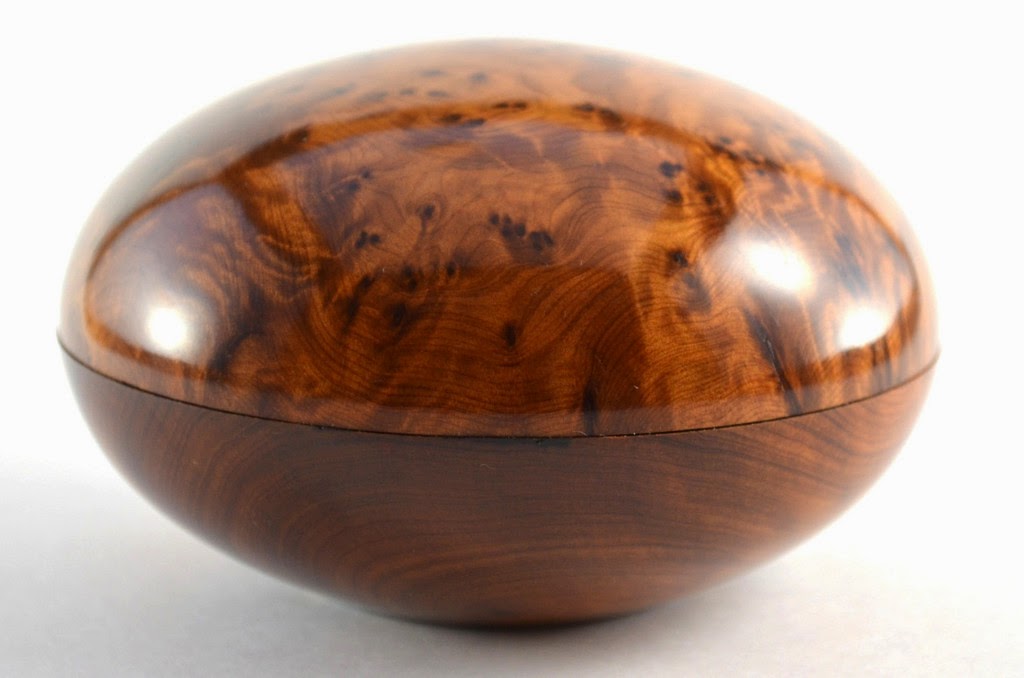
Thuya Wood Boxes

Thuya wood (pronounced twee-ya) is a very special wood.  It comes from a coniferous tree in the cypress family (Tetraclinis articulate) that is native to the Atlas Mountains in Morocco. Today, although there are small endangered thuya populations in Malta and Southern Spain, the trees still primarily grow only in Morocco.

The other reason this wood is rare and highly prized is because it is the underground burls that grow from the roots, not the trunks of the trees, that are harvested. These burls are relatively small and heavily figured resulting in gorgeously patterned products.

Because of the burl the wood can be difficult to work with, splitting and chipping easily. Artisans in Morocco know that it should be shaped by hand, then sanded and rubbed with oil and lemon juice to bring out the natural lustre and grain pattern.  In Morocco, particularly in Essaouira, generations of artisans have been working with thuya wood and handing down skills and techniques.

Our lovely thuya wood boxes come directly from Morocco, fairly traded of course.  By continuing our support we hope to be part of the effort to keep the handcrafting tradition alive. Replanting programs and regulating measures are in place to protect the trees, and craftspeople continue to teach their children the techniques they learned from their parents. Sounds good to us.

The boxes are everything that boxes should be: they absolutely delight the eye, they feel good in the hand, and they intoxicate with a smoky cedar-like scent when opened.
When it comes to boxes, you couldn't ask for more.


Friday, September 26, 2014

What is Fair Trade?

Fair trade, in essence, has come to mean a commitment to fair business practices so that workers are paid a living wage, are never exploited, and are ensured safe working conditions.

It's a movement that began as early as the 1940's and primarily impacts commodities and handicrafts. It demands higher standards for people and the environment, and it's a movement that we at Dogwood Box believe in.

For us, buying fairly traded handcrafted boxes from artisans means we are helping those artisans to continue their handcrafting traditions.  Living wages mean they are able to build sustainable businesses around their craft, and build community around those businesses.  Stability and dependable income help families to thrive.

This is why we don't include machine made, mass-produced boxes in our collection.  We are not interested in selling cheap goods at the expense of people and the environment. We're interested in helping people gain access to unique, handcrafted items they can feel good about purchasing.  We believe we need more handcrafted things in our lives, not fewer.

So does fair trade matter?  Besides keeping children from forced labor, workers from exploitation and dangerous conditions, and minimizing environmental damage, fair trade promotes transparency and long-term relationships between business partners.  Again, supporting community strength and stability.  It may cost more, it may take longer, but it's founded on respect and not greed.  That matters to us.


Tuesday, September 23, 2014

Spotlight on Soapstone

Soapstone, or steatite, has been a favorite carving medium for thousands of years.

It is a type of metamorphic rock, meaning that - in simple terms - temperature and pressure underground caused an existing rock to change form into another type.

That new type of rock, soapstone, is composed largely of talc making it relatively soft (that changes depending on the talc content), with an oily or soapy feel to it.  That's right, soapy.

It is because of that soft carvable quality that soapstone has been used to make sculpture, handicrafts and home goods for a very long time. The oldest identified soapstone sculpture was found in China, and is over three thousand years old. Soapstone use began in China but spread all over the world, from Alaska to India, as other cultures began mining or trading soapstone, and carving it for themselves.

Soapstone can be found in a variety of colors, although it is sometimes dyed for handicrafts. After the stone is mined, processing the stone generally consists of carving, washing, etching, and polishing.

In our collection we currently have several interesting soapstone boxes.  From India, and its long history of soapstone carving, our Black Soapstone box is actually gray stone that has been stained black.  Artisans then use small drills to etch the floral designs, revealing the gray color underneath.

We also have boxes from Kenya.  Both our Lizards and Soapstone Swirl boxes are from the region of Kisii.  A local mine provides soapstone for many artisans in that region, including the artisans who formed SMOLart Self Help Group, a fair trade organization from Tabaka and makers of our Lizards box.

Soapstone continues to be a medium that carvers embrace, coaxing out character and beauty. So we'll continue to add more amazing, always fairly traded, soapstone boxes to our collection.


Monday, September 22, 2014

Art vs. Craft

The difference between art and craft?
A very old question, with many different answers and opinions.

Some say the difference may lie in the intent of the artist or artisan.  Are they exploring an idea, or trying to convey meaning, or expressing feeling with their work?  
Does that make it art?
But craft can certainly express emotion, can come from the artisan’s exploration of an idea.

In 1938 the British philosopher R. G. Collingwood wrote that craft is preconceived, and pre-planned, at least to some degree.  Again touching on this idea of intent.  Yes, a carpenter makes a plan before beginning to build a chair, but don't some fine artists also make sketches and block out their canvas before starting to paint?

So is it material that defines craft?
Is it the use of ceramic or fiber or glass that distinguishes it from art?
Not according to the many artists who use those materials to express themselves.

Some say it is the repetition of creating handicrafts that make it craft, not art.  This is a very interesting aspect of the question.  If the original piece was created by an artisan who felt they were creating art, who then went on to create several pieces just like it, does the repetition diminish the artistic intention?  When an object is made by hand each one will be slightly different, so does the uniqueness support the notion that each piece is artwork?

And what about function.  We tend to think of craft as functional, something you use or wear.  But can art be functional? Yes.  And can craft be decorative, but not useful? Certainly.

Many think that a work can be either craft or art, but can also be both.
That may be the most important idea: that the lines between art and craft are blurred and indistinct.
It’s why we support handcrafting – for us, our handcrafted boxes mean wonderful elements of both.


Tuesday, September 16, 2014

Decorative Boxes - Office Supplies With Style


   We use push pins, paper clips, staples, and pens. Why not have easy access to those items while giving yourself something nice to look at?

Using decorative boxes to hold those small office supplies is a win-win. Your drawers stay neat and you've added interest and beauty to your space.


When you put a few decorative boxes on your desk you add character and enhance the look of your work space, whether it's a home office or an office outside of the home.


Of course, you could take it a step further. Handcrafted, fairly traded decorative boxes mean you have something you really feel good about holding your things.

Our boxes are handcrafted, so the little variations on each one mean that every box is a one-of-a-kind.  They're fairly traded, so you know that the artisans were fairly paid, never exploited, and worked under safe conditions.  And they're made by artisans who value craft and tradition, who don't believe mass-produced items should replace handmade goods.

We like using separate small boxes for things like pins and paper clips.  The lids open easily so taking those small items out (and putting them in) is quick, and there's no rummaging around to find what you need - that's the key to staying organized.